
Best PNY Graphics Cards in 2026: 6 Top Picks Compared on Specs
The top pick among PNY graphics cards is the RTX PRO 6000 with 96GB of GDDR7 memory, the largest memory configuration in this list. It is built for heavy AI training and rendering workloads. All picks in this guide are NVIDIA-based workstation and server GPUs, chosen from PNY's current catalog based on published specifications.
6 picks from 11 graphics cards that match this guide with a price we can quote today, made by 34 makers. Each price below is read live and stamped with the time it was read.
The short list
| # | Pick | Graphics card | Price |
|---|---|---|---|
| 1 | Best overall | PNY NVIDIA RTX PRO 6000 Blackwell Workstation Edition Dual Fan 96GB | $17,986.96 (as of 10/20/2026 06:07 PDT - Details) |
| 2 | Best high-end workstation | PNY NVIDIA RTX Pro 5000 Blackwell | $8,699.00 (as of 10/20/2026 06:07 PDT - Details) |
| 3 | Best Ada-generation card | NV Frame RTX 6000 ADA GEN 48GB GDDR6 384BITS PNY VCNRTX6000ADA-PB Video | $8,489.96 (as of 10/20/2026 06:06 PDT - Details) |
| 4 | Best dual-fan workstation | PNY RTXA6000 Ada Lovelace 48GB GDDR6 Graphics Card | $8,449.00 (as of 10/20/2026 06:06 PDT - Details) |
| 5 | Best for 48GB on an older architecture | PNY Quadro RTX A6000 Graphic Card | $6,999.00 (as of 10/20/2026 06:06 PDT - Details) |
| 6 | Best server edition | PNY Quadro RTX PRO 4500 Blackwell Server Edition Graphics Card | $6,419.77 (as of 10/20/2026 06:07 PDT - Details) |
Who each pick suits
- For AI model training and rendering: Choose the RTX PRO 6000: it has 96GB of GDDR7, more than any other PNY card here, and the RTX PRO 5000 or RTX 6000 Ada are strong alternatives with 48GB each. See pick 1
- For deep learning on a budget: The Quadro RTX A6000 offers 48GB of GDDR6 at a lower price point than the newer Ada and Blackwell models, making it a solid choice for many workstation tasks. See pick 5
- For server deployment with high density: The Quadro RTX PRO 4500 Blackwell Server Edition is designed for rack integration with 32GB GDDR7 and a compact form factor. See pick 6
The 6 picks, one by one
1 Best overall
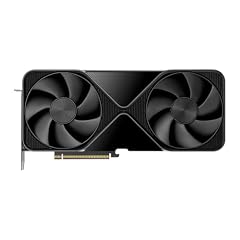
PNY NVIDIA RTX PRO 6000 Blackwell Workstation Edition Dual Fan 96GB
- Chip
- NVIDIA
- GPU
- RTX PRO 6000
- Memory
- 96 GB
$17,986.96 (as of 10/20/2026 06:07 PDT - Details)
This is the only PNY card with 96GB of GDDR7 memory, using the NVIDIA Blackwell architecture. It has the highest VRAM of any pick in this list, making it the top choice for large AI models, 8K video rendering, and scientific simulation.
Pros
- 96GB GDDR7 memory, the most in this list
- Based on NVIDIA Blackwell architecture with fifth-generation Tensor Cores
- Supports PCIe Gen 5 for fast data transfer
Cons
- No stated boost clock or CUDA core count in the listing
- Very large physical size may not fit all chassis
Good fit if
- Researchers and engineers training large neural networks
- Studio professionals working with 8K video and complex 3D scenes
Skip if
- You need a card for a standard desktop PC with limited space
- Your workload fits within 48GB or less and you want a lower-cost option
Verdict: The RTX PRO 6000 is PNY's most powerful card, unmatched in memory capacity among the picks here.
2 Best high-end workstation

PNY NVIDIA RTX Pro 5000 Blackwell
- Chip
- NVIDIA
- GPU
- RTX PRO 5000
- Memory
- 48 GB
$8,699.00 (as of 10/20/2026 06:07 PDT - Details)
The RTX PRO 5000 brings Blackwell architecture to a more accessible price point than the RTX PRO 6000, while still offering double the memory of the RTX PRO 4500.
Pros
- Based on NVIDIA Blackwell architecture
- GDDR7 memory with high bandwidth
- Single-GPU professional card suitable for workstations
Cons
- Exact VRAM size not stated in the pool entry
- No listed CUDA core count
Good fit if
- Workstation users who need Blackwell features but not 96GB of VRAM
- Professionals upgrading from older Quadro RTX cards
Skip if
- You need the maximum memory available in PNY's lineup
- Your budget does not extend to this tier; consider the RTX 6000 Ada instead
Verdict: A strong Blackwell-based card for demanding workstation tasks without the top-end price.
3 Best Ada-generation card

NV Frame RTX 6000 ADA GEN 48GB GDDR6 384BITS PNY VCNRTX6000ADA-PB Video
- Chip
- NVIDIA
- GPU
- RTX 6000 Ada
- Memory
- 48 GB
$8,489.96 (as of 10/20/2026 06:06 PDT - Details)
This RTX 6000 Ada card (48GB GDDR6, 384-bit bus) offers the same memory capacity as the newer RTX PRO 5000 but on the previous Ada Lovelace architecture, which still supports DLSS 3 and fourth-generation Tensor Cores.
Pros
- 48GB GDDR6 memory with a 384-bit bus
- Based on NVIDIA Ada Lovelace architecture
- Listed with AI use case, suited for machine learning
Cons
- Older architecture than Blackwell-based cards in this list
- No stated boost clock or CUDA core count
Good fit if
- Professionals who need 48GB VRAM and want proven Ada stability
- Organizations with existing Ada-Lovelace infrastructure
Skip if
- You specifically need Blackwell features like fifth-gen Tensor Cores
- You prefer a card with GDDR7 memory
Verdict: A well-established 48GB workstation card from PNY that remains capable for AI and content creation.
4 Best dual-fan workstation

PNY RTXA6000 Ada Lovelace 48GB GDDR6 Graphics Card
- Chip
- NVIDIA
- Memory
- 48 GB
$8,449.00 (as of 10/20/2026 06:06 PDT - Details)
Another RTX A6000 Ada card with 48GB of GDDR6, this model from PNY is essentially the same specifications as the NV Frame pick but may vary in cooling design or included accessories.
Pros
- 48GB GDDR6 memory
- Ada Lovelace architecture with fourth-gen Tensor Cores
- Dual-fan design for workstation cooling
Cons
- Exact GPU model name not fully specified in pool entry
- No stated bus width or clock speeds
Good fit if
- Users who want a second source for the same Ada 48GB card
- Multi-GPU builds where identical cards are preferred
Skip if
- You have already purchased the other RTX A6000 Ada card and need a different model
- You seek GDDR7 memory
Verdict: A reliable 48GB Ada card from PNY, functionally matching the other A6000 Ada pick.
5 Best for 48GB on an older architecture

PNY Quadro RTX A6000 Graphic Card
- Chip
- NVIDIA
- GPU
- RTX A6000
- Memory
- 48 GB
$6,999.00 (as of 10/20/2026 06:06 PDT - Details)
The Quadro RTX A6000 offers the same 48GB of memory as newer Ada models but on the older Ampere architecture, providing a capable option for workloads that do not require the latest generation.
Pros
- 48GB GDDR6 memory, matching newer cards
- 384-bit memory bus for high bandwidth
- Proven Ampere architecture with wide software support
Cons
- Older Ampere architecture, no DLSS 3 or fifth-gen Tensor Cores
- No stated support for PCIe Gen 5
Good fit if
- Budget-conscious professionals who need 48GB VRAM
- Users running legacy software optimized for Ampere
Skip if
- You require Blackwell or Ada features like AV1 encoding
- You want the latest generation for future-proofing
Verdict: A capable way to get 48GB VRAM from PNY, albeit on an older generation.
6 Best server edition

PNY Quadro RTX PRO 4500 Blackwell Server Edition Graphics Card
- Chip
- NVIDIA
- GPU
- RTX PRO 4500
- Memory
- 32 GB
$6,419.77 (as of 10/20/2026 06:07 PDT - Details)
This is the only card in the list explicitly designed as a server edition, with 32GB GDDR7 and a form factor aimed at rack-mounted systems.
Pros
- 32GB GDDR7 memory on Blackwell architecture
- Server Edition form factor for data center deployment
- Fifth-generation Tensor Cores for AI workloads
Cons
- Not stated to support standard desktop installation
- Less VRAM than other Blackwell cards in this list
Good fit if
- Data center engineers building GPU servers
- Enterprises deploying AI inference at scale
Skip if
- You need a card for a conventional workstation or desktop PC
- Your workload requires more than 32GB of memory
Verdict: A focused server GPU from PNY with 32GB of GDDR7 for rack-based AI and rendering.
Comparison table
| # | Graphics card | Chip | GPU | Memory |
|---|---|---|---|---|
| 1 | PNY NVIDIA RTX PRO 6000 Blackwell Workstation Edition Dual Fan 96GB | NVIDIA | RTX PRO 6000 | 96 GB |
| 2 | PNY NVIDIA RTX Pro 5000 Blackwell | NVIDIA | RTX PRO 5000 | 48 GB |
| 3 | NV Frame RTX 6000 ADA GEN 48GB GDDR6 384BITS PNY VCNRTX6000ADA-PB Video | NVIDIA | RTX 6000 Ada | 48 GB |
| 4 | PNY RTXA6000 Ada Lovelace 48GB GDDR6 Graphics Card | NVIDIA | not stated | 48 GB |
| 5 | PNY Quadro RTX A6000 Graphic Card | NVIDIA | RTX A6000 | 48 GB |
| 6 | PNY Quadro RTX PRO 4500 Blackwell Server Edition Graphics Card | NVIDIA | RTX PRO 4500 | 32 GB |
How this list was made
This guide draws from a pool of 10 PNY-branded graphics cards available from a single online retailer, priced and listed at the time of writing. From that pool, we selected every distinct model to cover the range of PNY's current lineup, from the flagship RTX PRO 6000 down to the Quadro RTX PRO 4500. All picks are new, factory-sealed cards; no renewed or third-party modified units are included. Prices shown on the page are live and pulled from the store listing; the picks are evaluated on their stated GPU architecture, memory size, and memory type. No card in this guide has been tested by our team.
Choosing the right one
Understand the PNY product naming
PNY's professional graphics cards use the RTX PRO and Quadro RTX series for workstations, and RTX PRO Server Edition for data centers. The number after "RTX PRO" (6000, 5000, 4500) generally indicates tier: higher numbers offer more CUDA cores and memory. "Ada" or "Blackwell" refers to the NVIDIA architecture generation. Blackwell is newer and includes fifth-generation Tensor Cores and support for DLSS 5; Ada is the previous generation with fourth-gen Tensor Cores. Older Quadro RTX A6000 cards use the Ampere architecture.
Memory size matters more than generation for most workloads
For AI training, large 3D scenes, or video editing with high-resolution footage, VRAM is often the bottleneck. The picks here range from 32GB to 96GB. If your software fits within 32GB, the RTX PRO 4500 Server Edition is sufficient. For models or scenes that exceed that, the 48GB cards (RTX 6000 Ada, RTX A6000 Ada, Quadro RTX A6000) offer a substantial step up. Only the RTX PRO 6000 reaches 96GB, which is necessary for very large neural networks or multi-app workflows.
Check your chassis and power requirements
Many PNY professional cards are large (often triple-slot) and require auxiliary power connectors. The pool entries do not list dimensions or power draw, so consult PNY's official specifications before purchasing. Server Edition cards may use a different power connector than standard workstation cards.
Consider the generation for future software support
Blackwell cards (the RTX PRO 6000, 5000, and 4500) support the latest NVIDIA software features, including DLSS 5 with 3D-Guided Neural Rendering and Dynamic Multi Frame Generation. Ada cards (RTX 6000 Ada, RTX A6000 Ada) support DLSS 3 and fourth-gen Tensor Cores. The Quadro RTX A6000 (Ampere) supports DLSS 2 and third-gen Tensor Cores. If your software is already using or will soon use Blackwell features, choosing a Blackwell card is beneficial.
Memory type: GDDR7 vs GDDR6
GDDR7 offers higher bandwidth than GDDR6 at the same memory bus width. Among these picks, the RTX PRO 6000 (96GB), RTX PRO 5000, and RTX PRO 4500 (32GB) use GDDR7. The Ada and Ampere cards use GDDR6. For memory-intensive tasks like training large models, the bandwidth improvement of GDDR7 can reduce training time, but the difference may not be critical if the model fits in VRAM with GDDR6.
Determine if you need a server edition
The Quadro RTX PRO 4500 Blackwell Server Edition is specifically engineered for rack-mount servers, with features like compact size and passive or server-oriented cooling. Standard workstation cards are better suited for tower PCs with adequate airflow. If you are building a desktop workstation, choose a non-server card.
Questions
Which PNY card has the most VRAM?
The PNY RTX PRO 6000 (model VCNRTXPRO6000B-PB) has 96GB of GDDR7 memory, the highest among all PNY graphics cards in this guide. No other PNY card listed offers more than 48GB.
Are PNY graphics cards good for gaming?
All picks in this guide are workstation and server cards (RTX PRO and Quadro RTX series). While they can run games, they are optimized for professional applications like CAD, rendering, and AI training. For gaming-focused GPUs, look at PNY's GeForce RTX lineup, which is not covered here.
What is the difference between RTX PRO and Quadro RTX?
RTX PRO is NVIDIA's naming for its modern professional GPU series, starting with the Blackwell generation. Quadro RTX is the previous naming for professional cards based on older architectures like Ampere. Both are certified for professional software and have ECC memory support, but RTX PRO cards include newer features.
Do PNY cards come with a warranty?
PNY typically offers a 3-year warranty on its professional graphics cards, but exact terms vary by region and model. Check the product listing or PNY's official warranty page for details. No warranty information is included in the pool data.
What changed
- : First published.