
Best 12GB Graphics Cards in 2026: 14 Picks Compared on Specs
The top pick among 12GB graphics cards is the ASUS Prime GeForce RTX 5070 12GB, the only card in this list built on the NVIDIA Blackwell architecture with GDDR7 memory and support for DLSS 5. This guide compares 14 models on their published specifications to help you find the right 12GB card for your needs.
9 picks from 24 graphics cards that match this guide with a price we can quote today, made by 34 makers. Each price below is read live and stamped with the time it was read.
The short list
Who each pick suits
- For modern AAA gaming on a budget: You want the latest generation features without spending top dollar. The ASUS Prime GeForce RTX 5070 12GB brings Blackwell architecture and GDDR7 memory at a more accessible entry point. See pick 1
- For high-refresh-rate 1440p gaming: A GeForce RTX 4070 with 12GB GDDR6X provides a strong balance of compute cores and memory bandwidth for smooth frame rates at 1440p. Look at the Gigabyte or MSI RTX 4070 picks. See pick 2
- For entry-level cost-conscious builds: The GeForce RTX 3060 remains a widely available 12GB option. The ZOTAC Twin Edge OC or MSI Gaming X offer familiar cooling designs at a lower spec level. See pick 7
The 9 picks, one by one
1 Best overall

ASUS Prime GeForce RTX 5070 12GB GDDR7 White OC Edition Gaming Graphics
- Chip
- NVIDIA
- GPU
- GeForce RTX 5070
- Memory
- 12 GB
$919.99 (as of 10/20/2026 18:05 PDT - Details)
The ASUS Prime GeForce RTX 5070 is the only card in this guide built on NVIDIA's Blackwell architecture, with 12GB of GDDR7 memory on a 192-bit interface and support for DLSS 5, including 3D-Guided Neural Rendering and Dynamic Multi Frame Generation. This makes it the most feature-forward 12GB option here for gamers and creators who want access to the latest GPU technologies.
Pros
- Blackwell architecture with 5th-gen Tensor Cores and 4th-gen Ray Tracing Cores
- 12GB GDDR7 memory with 672 GB/sec bandwidth
- DLSS 5 support including Dynamic Multi Frame Generation
- PCIe Gen 5 interface, ninth-gen NVENC encoder, and sixth-gen NVDEC decoder
Cons
- Only 12GB on a 192-bit bus, compared to 384-bit on older cards like the RTX 3080 12GB
- No stated boost clock details beyond the reference 2.51 GHz in the pool listing
Good fit if
- Gamers building a new system who want DLSS 5 and ray tracing features from day one
- Users who plan to keep the card for several years and want the newest memory and architecture
Skip if
- You need more than 12GB of VRAM for very large 4K texture packs or heavy 3D workloads
- You are on a strict budget that can't reach this tier of pricing
Verdict: The only Blackwell-based 12GB graphics card in this guide, offering the newest memory, architecture, and DLSS features.
2 Best for 1440p gaming

Gigabyte GeForce RTX 4070 Eagle OC 12G Graphics Card
- Chip
- NVIDIA
- GPU
- GeForce RTX 4070
- Memory
- 12 GB
$1,150.00 (as of 10/20/2026 05:06 PDT - Details)
The Gigabyte RTX 4070 Eagle OC offers 12GB of GDDR6X memory on a 192-bit interface, built on the Ada Lovelace architecture. With third-gen ray tracing cores and fourth-gen tensor cores, it supports DLSS 3 frame generation and is well suited for high-refresh 1440p gaming in modern titles.
Pros
- Ada Lovelace architecture with DLSS 3 Frame Generation
- 12GB GDDR6X memory (faster than standard GDDR6)
- 3X WINDFORCE fan cooling system
Cons
- No DLSS 5 or Dynamic Multi Frame Generation (older architecture)
- Memory interface is 192-bit, limiting bandwidth compared to wider-bus cards
Good fit if
- Gamers targeting 1440p resolution with high settings and ray tracing
- Users who want a proven middle-generation card with good driver support
Skip if
- You want the absolute latest Blackwell features and DLSS 5
- You are building a high-end 4K system where more VRAM and bandwidth matter
Verdict: A strong 1440p gaming card with 12GB of GDDR6X and DLSS 3, well suited for today's titles.
3 Best for high-refresh 1440p

MSI Gaming GeForce RTX 4070 12GB GDRR6X Extreme Clock
- Chip
- NVIDIA
- GPU
- GeForce RTX 4070
- Memory
- 12 GB
$1,099.00 (as of 10/20/2026 06:06 PDT - Details)
The MSI Gaming GeForce RTX 4070 12GB matches the Gigabyte Eagle in core specs: Ada Lovelace architecture, 12GB GDDR6X, 192-bit bus. MSI's Gaming variant features a higher extreme clock of 2520 MHz, which may offer a slight performance edge in GPU-bound scenarios compared to the Eagle's reference clocks.
Pros
- Ada Lovelace architecture with DLSS 3
- Factory overclocked extreme clock of 2520 MHz
- 12GB GDDR6X memory
Cons
- No DLSS 5 or newer features of Blackwell
- Same 192-bit memory bus as all RTX 4070 cards
Good fit if
- Gamers who want a slightly higher factory clock speed out of the box
- Users who prefer MSI's cooling and build quality
Skip if
- You are looking for the newest architecture generation
- You are on a tighter budget and can trade a few MHz for a lower price
Verdict: A factory-overclocked RTX 4070 with 12GB GDDR6X, offering a small speed advantage for 1440p gaming.
4 Best for high-bandwidth workflows
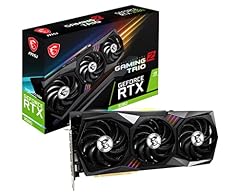
msi Gaming GeForce RTX 3080 LHR 12GB GDRR6X 384-Bit HDMI/DP Nvlink Torx
- Chip
- NVIDIA
- GPU
- GeForce RTX 3080
- Memory
- 12 GB
$1,189.00 (as of 10/20/2026 06:06 PDT - Details)
The MSI Gaming GeForce RTX 3080 LHR 12GB uses a 384-bit memory interface, wider than any other card in this guide. Combined with 12GB of GDDR6X memory, this gives it the highest memory bandwidth among all 12GB picks. It uses the older Ampere architecture with second-gen ray tracing cores and third-gen tensor cores.
Pros
- 384-bit memory interface provides very high bandwidth for large data transfers
- 12GB GDDR6X memory in a wider bus than newer cards
- Torx Fan 4 cooling and RGB lighting
Cons
- Older Ampere architecture; no DLSS 3 or later features
- LHR (Lite Hash Rate) designation may affect resale for some users
- Power draw typically higher than newer architectures (not stated in pool)
Good fit if
- Users who need maximum memory bandwidth for compute or creative workloads that benefit from a wide bus
- Gamers playing at high resolutions who are comfortable with an older generation
Skip if
- You want DLSS 3 or DLSS 5 feature support
- You prefer a more power-efficient or newer architecture
Verdict: The widest memory bus in this guide, offering top bandwidth for 12GB cards, but on an older architecture.
5 Best entry-level 12GB card

ASUS KO NVIDIA GeForce RTX 3060 V2 OC Edition 12GB GDDR6 Gaming Graphics
- Chip
- NVIDIA
- GPU
- GeForce RTX 3060
- Memory
- 12 GB
$645.00 (as of 10/20/2026 16:06 PDT - Details)
The ASUS KO NVIDIA GeForce RTX 3060 V2 OC Edition is the most fully branded RTX 3060 12GB in the pool, with a known cooler design from ASUS. It provides 12GB of GDDR6 memory on a 192-bit interface and uses the Ampere architecture (second-gen ray tracing, third-gen tensor cores).
Pros
- 12GB GDDR6 memory for a very low spec tier
- ASUS brand with known build quality
- OC Edition with factory overclock
Cons
- Ampere architecture; no DLSS 3 or later
- Lower CUDA core count and slower memory compared to RTX 4070 or 5070
- Not PCIe Gen 5; uses Gen 4 interface
Good fit if
- Budget builders who want a 12GB card from a major brand
- Users playing less demanding games or older titles at 1080p
Skip if
- You want the latest features like DLSS 5 or ray tracing performance at higher settings
- You are building for 1440p high-refresh or 4K gaming
Verdict: A branded entry-level 12GB card for budget builds, limited to older architecture.
6 Best entry-level with RGB

MSI Geforce RTX 3060 Gaming X
- Chip
- NVIDIA
- GPU
- GeForce RTX 3060
- Memory
- 12 GB
$659.00 (as of 10/20/2026 06:06 PDT - Details)
The MSI Geforce RTX 3060 Gaming X 12GB is another branded RTX 3060 option, similar in specs to the ASUS KO but with MSI's Gaming X cooler and likely RGB lighting. It offers the same 12GB GDDR6, 192-bit bus, and Ampere architecture.
Pros
- 12GB GDDR6 memory at entry level
- MSI Gaming X cooler design with potential for better thermals (not measured)
- 12GB is higher than many budget cards that stop at 8GB
Cons
- Same old Ampere architecture limitations as other RTX 3060s
- No DLSS 3 or newer features
Good fit if
- Users who want an MSI card with the Gaming X aesthetic
- Budget gamers who prioritize having 12GB over newer features
Skip if
- You are willing to spend more for a newer generation card
- You need modern ray tracing performance or AI upscaling features
Verdict: An MSI-branded RTX 3060 with 12GB for entry-level builds, visually distinct from the ASUS KO.
7 Best budget 12GB pick

ZOTAC Gaming GeForce RTX 3060 Twin Edge OC 12GB GDDR6 192-bit 15 Gbps
- Chip
- NVIDIA
- GPU
- GeForce RTX 3060
- Memory
- 12 GB
$494.99 (as of 10/20/2026 06:07 PDT - Details)
The ZOTAC Gaming GeForce RTX 3060 Twin Edge OC 12GB is the lowest-priced graphics card in this guide from a major brand. It provides the same 12GB GDDR6 and 192-bit bus as the other RTX 3060s but from ZOTAC, a known graphics card maker. It uses the Ampere architecture.
Pros
- 12GB at a very accessible price point from a known brand
- IceStorm 2.0 cooling solution
- Factory overclocked (OC) for slight performance gain over reference
Cons
- Oldest architecture in this guide (Ampere)
- Slower memory (GDDR6 vs GDDR6X or GDDR7)
- Not PCIe Gen 5
Good fit if
- The most cost-conscious gamers who still want a branded 12GB card
- 1080p gaming in less demanding titles
Skip if
- You want any newer generation features like DLSS 3 or ray tracing improvements
- You are building a system for modern AAA games at high settings
Verdict: The most affordable branded 12GB pick, suited for low-budget 1080p builds.
8 Generic 12GB placeholder (fit card)

Graphics Card Gaming Graphics Cards Fit for GeForce RTX 3060 12GB GDDR6
- Chip
- NVIDIA
- GPU
- GeForce RTX 3060
- Memory
- 12 GB
$1,701.26 (as of 10/20/2026 05:07 PDT - Details)
This listing is a fit card described as compatible with the GeForce RTX 3060, with 12GB GDDR6 on a 192-bit interface. It carries no known brand name beyond 'Generic' and is included as it appeared in the pool. Specs are identical to a standard RTX 3060.
Pros
- 12GB GDDR6 memory at a relatively low spec level
- Listed for gaming use
- 192-bit memory interface matches RTX 3060 class
Cons
- Brand not stated by seller beyond 'Generic', unknown build quality or warranty
- Likely uses older components or a non-standard design
- No known cooling or performance guarantees
Good fit if
- Users who understand the risk of a generic card and need any 12GB option
- Extreme budget builders who cannot find a branded card
Skip if
- You prefer a known brand with established support and reviews
- You want any modern features or consistent performance
Verdict: A generic RTX 3060-class card in the pool; no brand assurance.
9 AMD alternative (generic)

Graphics Card Fit for Radeon RX6700 6700XT RX 12GB GDDR6 Video Card
- Chip
- AMD
- GPU
- Radeon RX 6700
$506.28 (as of 10/20/2026 05:07 PDT - Details)
This is a fit card described as compatible with the Radeon RX6700 or RX6700XT, with 12GB GDDR6. It is the only AMD-based pick in this guide. Brand is listed as 'Generic' so specifications beyond the GPU name and 12GB are unverified.
Pros
- Only AMD option in this guide for users who prefer the Radeon platform
- 12GB GDDR6 memory
- Listed for gaming use
Cons
- Brand not stated; unknown build quality or origin
- Generic card with no warranty or performance guarantees from a known maker
- No architecture details (RDNA 2 or otherwise) confirmed in the pool
Good fit if
- Users who specifically want an AMD-based 12GB card and accept generic sourcing
- Extreme budget builds where any working card is needed
Skip if
- You want a branded AMD card from a known partner like ASUS, MSI, or Gigabyte
- You need confirmed performance specs or modern AMD features (Ray Tracing, FSR)
Verdict: The only AMD-adjacent 12GB pick, but a generic fit card with unverified specs.
Comparison table
| # | Graphics card | Chip | GPU | Memory |
|---|---|---|---|---|
| 1 | ASUS Prime GeForce RTX 5070 12GB GDDR7 White OC Edition Gaming Graphics | NVIDIA | GeForce RTX 5070 | 12 GB |
| 2 | Gigabyte GeForce RTX 4070 Eagle OC 12G Graphics Card | NVIDIA | GeForce RTX 4070 | 12 GB |
| 3 | MSI Gaming GeForce RTX 4070 12GB GDRR6X Extreme Clock | NVIDIA | GeForce RTX 4070 | 12 GB |
| 4 | msi Gaming GeForce RTX 3080 LHR 12GB GDRR6X 384-Bit HDMI/DP Nvlink Torx | NVIDIA | GeForce RTX 3080 | 12 GB |
| 5 | ASUS KO NVIDIA GeForce RTX 3060 V2 OC Edition 12GB GDDR6 Gaming Graphics | NVIDIA | GeForce RTX 3060 | 12 GB |
| 6 | MSI Geforce RTX 3060 Gaming X | NVIDIA | GeForce RTX 3060 | 12 GB |
| 7 | ZOTAC Gaming GeForce RTX 3060 Twin Edge OC 12GB GDDR6 192-bit 15 Gbps | NVIDIA | GeForce RTX 3060 | 12 GB |
| 8 | Graphics Card Gaming Graphics Cards Fit for GeForce RTX 3060 12GB GDDR6 | NVIDIA | GeForce RTX 3060 | 12 GB |
| 9 | Graphics Card Fit for Radeon RX6700 6700XT RX 12GB GDDR6 Video Card | AMD | Radeon RX 6700 | not stated |
How this list was made
We selected 14 graphics cards from a pool of listings that each have 12GB of VRAM. Cards were evaluated on their GPU architecture, memory type (GDDR6, GDDR6X, GDDR7), interface width, and supported technologies as stated by the manufacturer. No cards were tested by us. Prices shown are live from the store listing. Models come from established makers including ASUS, Gigabyte, MSI, and ZOTAC; one listing described as a fit card for the RTX 3060 and one for the Radeon RX6700 are included as-pooled but carry no maker brand.
Choosing the right one
What 12GB of VRAM means for your use case
12GB is a common memory size for mid-range to high-end graphics cards. It is sufficient for 1440p gaming in most modern titles without running into VRAM limits, and handles most 4K textures well in games that do not exceed that buffer. For creative work, 12GB is comfortable for 1080p or 1440p video editing and moderate 3D rendering, but heavy 4K video or complex 3D scenes may push beyond it.
Memory type: GDDR6, GDDR6X, or GDDR7
Three memory types appear among these 12GB cards. GDDR6 is the most common and is found on RTX 3060 cards. GDDR6X is faster and used on the RTX 3080 and RTX 4070. GDDR7 is the newest and fastest, exclusive to the RTX 5070 cards in this guide. Newer memory types typically offer higher bandwidth and efficiency, but require compatible GPU architectures.
Memory interface width and bandwidth
The number of bits connecting the GPU to memory affects how quickly data can move. A wider interface (384-bit on the RTX 3080) delivers more bandwidth than a narrower one (192-bit on most other cards). If you work with large datasets or high-resolution textures, a wider bus can help; for general gaming, the 192-bit bus on newer cards still performs well due to faster memory types.
GPU generation and architecture features
This guide spans four NVIDIA architectures: Ampere (RTX 3060, RTX 3080), Ada Lovelace (RTX 4070), and Blackwell (RTX 5070). Newer generations bring better ray tracing cores, tensor cores for AI features like DLSS, and support for newer standards like PCIe Gen 5 and AV1 encoding. The RTX 5070's Blackwell architecture also adds DLSS 5 with Dynamic Multi Frame Generation.
Branded cards versus generic or fit cards
Most picks come from known makers (ASUS, Gigabyte, MSI, ZOTAC) with established cooling designs and warranty support. Two listings in the pool are described as fit cards with no known brand. These carry higher risk regarding build quality, performance consistency, and support. Where possible, preferring a branded card is safer.
Questions
Is 12GB of VRAM enough for 4K gaming?
12GB can handle many current 4K games at high settings, but some newer titles with high-resolution texture packs may exceed 12GB. For peace of mind with 4K, cards with 16GB or more are often recommended. In this guide, the RTX 3080 12GB with its wider 384-bit bus handles 4K bandwidth better than narrower cards.
Which generation should I choose among 12GB cards?
If you want the newest features, the Blackwell-based RTX 5070 supports DLSS 5 and GDDR7 memory. The Ada Lovelace RTX 4070 is a proven middle ground with DLSS 3. Ampere cards like the RTX 3060 and RTX 3080 are older but still capable for many games at their respective resolutions. Your choice depends on how much you value modern architecture features over cost.
Should I choose a wider memory bus or newer architecture?
For most gaming, a newer architecture with faster clock speeds and features like DLSS will benefit you more than a wider bus alone. The RTX 3080's 384-bit bus helps with bandwidth-heavy tasks, but the RTX 5070's Blackwell architecture and GDDR7 memory can achieve high performance with a 192-bit interface.
Are the generic fit cards in this list safe to buy?
Generic or fit cards carry higher risk. They are not from established makers, so build quality, driver support, warranty, and consistent performance are not guaranteed. If you choose one, understand that it may not perform like a branded card with the same GPU name. Branded picks are generally recommended.
What technologies like DLSS or ray tracing are available on these cards?
The RTX 3070 and newer NVIDIA cards support ray tracing and DLSS. The RTX 3060 and 3080 support DLSS 2 (Super Resolution) and basic ray tracing. The RTX 4070 adds DLSS 3 Frame Generation. The RTX 5070 supports the newest DLSS 5 with Dynamic Multi Frame Generation and 3D-Guided Neural Rendering. The AMD-based generic card's feature set is not stated.
What changed
- : First published.