
Best Graphics Cards under $150 in 2026: 14 Picks Compared
The card based on the GTX 750Ti has 4GB of GDDR5 memory, the most in this group. That configuration makes it a strong choice for memory-hungry tasks. Our selection is based on the specifications listed by the sellers; we have not tested these cards. We compared 14 graphics cards priced under $150 across memory size, memory type, form factor, and video outputs to help you match a card to your desktop and workload.
14 picks from 15 graphics cards that match this guide with a price we can quote today, made by 34 makers. Each price below is read live and stamped with the time it was read.
The short list
Who each pick suits
- For esports on a budget: If you play older or lightweight esports titles like League of Legends, Counter-Strike 2, or Dota 2 at 1080p, a 2GB GDDR5 card like the GTX 1050 can handle low to medium settings. See pick 2
- For a small form factor build: Low-profile cards such as the QTHREE GT 730 4GB or the SOYO GT 740 DDR3 fit into slim desktops without a full-height bracket. See pick 7
- For a legacy office PC: If you just need a basic display output for an older desktop that lacks integrated graphics, a GT 710 or GT 720 with VGA or DVI is a straightforward drop-in. See pick 6
The 14 picks, one by one
1 Best overall

Graphics Card GPU Fit for GTX 750Ti 4G Graphics Card GDDR5 128Bit 28nm
- Chip
- NVIDIA
- GPU
- GTX 750 Ti
- Memory
- 4 GB
$128.96 (as of 10/20/2026 05:07 PDT - Details)
This card, marketed as compatible with GTX 750Ti, has 4GB GDDR5 memory on a 128-bit bus, the most generous memory configuration among the 14 picks. The 28nm process and PCIe 3.0 support suggest it is a Maxwell-era part with solid 1080p potential for older games.
Pros
- 4GB GDDR5 memory, highest capacity in this group
- 128-bit memory interface improves bandwidth
- PCIe 3.0 connectivity
- Low-profile bracket included
Cons
- Generic branding, not an original NVIDIA product
- No stated display outputs in the listing
- Compatibility with all motherboards not confirmed
Good fit if
- Users who want the most VRAM for the price
- Gamers playing 1080p titles from a few years ago
Skip if
- You need a specific output like VGA or DisplayPort
- Your system has only a 300W power supply; check the card's draw
Verdict: The best all-rounder under $150 if you prioritize memory capacity over brand recognition.
2 Best for 1080p esports

Graphics Card Fit for GeForce GTX1050 2GB GDDR5 024K8H Graphics Card
- Chip
- NVIDIA
- GPU
- GeForce GTX 1050
- Memory
- 2 GB
$92.72 (as of 10/20/2026 05:07 PDT - Details)
With 2GB GDDR5 on a PCIe 3.0 bus, this GTX 1050-compatible card targets modern esports titles at 1080p. Its lower power draw and compact size suit typical desktop builds.
Pros
- 2GB GDDR5 memory
- PCIe 3.0 support
- HDMI output included
- Lower power consumption than larger cards
Cons
- Only 2GB VRAM, limiting texture quality in newer games
- Generic brand with no stated warranty
- May require a 6-pin power connector (not stated)
Good fit if
- Esports players who value responsiveness over visual fidelity
- Users with a modest power supply
Skip if
- You want to play AAA titles at high settings
- You need more than one display output
Verdict: A safe pick for competitive gaming at 1080p without breaking the bank.
3 Best for HTPC

ASUS GeForce GT 730 2GB GDDR5 Graphics Card | PCIe 2.0
- Chip
- NVIDIA
- GPU
- GeForce GT 730
- Memory
- 2 GB
$112.49 (as of 10/20/2026 16:06 PDT - Details)
ASUS is a recognized brand, and this GT 730 with 2GB GDDR5 provides reliable output for media centers. Its low profile and passive cooling (in some variants) make it quiet, though the listing does not specify cooling type.
Pros
- 2GB GDDR5 memory
- Brand from ASUS, a trusted GPU maker
- Supports DirectX 12 (per listing)
- Low-profile design likely fits HTPC cases
Cons
- Only 64-bit memory interface (not stated, inferred from model)
- Limited to basic 1080p video playback
- No fan noise details in the listing
Good fit if
- Users building a silent HTPC
- Those who need a reliable replacement card for office tasks
Skip if
- You plan to game beyond light esports
- You need more than one monitor
Verdict: A dependable choice for media consumption and general desktop use with an established brand.
4 Best low-profile with 4GB

QTHREE GeForce GT 730 4GB Graphics Card
- Chip
- NVIDIA
- GPU
- GeForce GT 730
- Memory
- 4 GB
$89.99 (as of 10/20/2026 06:06 PDT - Details)
QTHREE packs 4GB DDR3 memory into a low-profile bracket, making it ideal for space-constrained systems. The listing includes dual HDMI, DisplayPort, and VGA outputs, giving broad monitor compatibility.
Pros
- 4GB DDR3 memory
- Two HDMI, DisplayPort, and VGA outputs
- Low-profile bracket for small cases
- 64-bit interface for moderate bandwidth
Cons
- DDR3 is slower than GDDR5
- Generic brand with limited support
- May not fit all low-profile slots due to length
Good fit if
- Users with a slim desktop or HTPC
- People who need multiple display outputs on a budget
Skip if
- You need GDDR5 performance
- You have a full-height case and want a more powerful card
Verdict: A versatile low-profile card that offers more memory and connectivity than most in this price range.
5 Best for quad monitor setup

ARDIYES GT 740 4GB GDDR5 Low Profile GPU Graphics Card
- Chip
- NVIDIA
- GPU
- GeForce GT 740
- Memory
- 4 GB
$82.99 (as of 10/20/2026 16:05 PDT - Details)
This ARDIYES GT 740 provides four HDMI ports, a rare configuration for budget cards, enabling a quad-monitor workspace without adapters. The 4GB GDDR5 memory and PCIe 3.0 interface add headroom for multitasking.
Pros
- Four HDMI outputs for quad monitor support
- 4GB GDDR5 memory
- PCIe 3.0 connectivity
- Low-profile design
Cons
- All outputs are HDMI; no VGA or DVI included
- Generic brand with unknown long-term reliability
- May require low-profile bracket installation
Good fit if
- Traders, programmers, or anyone needing many screens
- Users who have HDMI-only monitors
Skip if
- You need VGA or DisplayPort outputs
- You plan to game at 1440p or higher
Verdict: An unbeatable choice for multi-monitor productivity under $150.
6 Best brand-name entry card
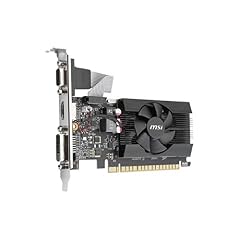
msi Gaming GeForce GT 710
- Chip
- NVIDIA
- GPU
- GeForce GT 710
- Memory
- 2 GB
$74.97 (as of 10/20/2026 06:06 PDT - Details)
MSI is a top-tier GPU maker, and this GT 710 includes HDMI, VGA, and DVI outputs in a compact 2GB GDRR3 design. It supports DirectX 12 and OpenGL 4.5, making it a safe, cheap upgrade for legacy systems.
Pros
- MSI brand with known quality control
- HDMI, VGA, and DVI outputs
- 2GB GDRR3 memory
- DirectX 12 and OpenGL 4.5 support
Cons
- 64-bit memory interface limits bandwidth
- GDRR3 is slower than GDDR5
- Only 2GB VRAM
Good fit if
- Users who need a reliable replacement card
- Office PCs that require basic video output
Skip if
- You want to play modern games
- You need a low-profile bracket (not stated)
Verdict: A dependable, well-known card for basic tasks and light media use.
7 Best for small form factor

SOYO GeForce GT 740 4GB DDR3 Low Profile Graphics Card
- Chip
- NVIDIA
- GPU
- GeForce GT 740
- Memory
- 4 GB
$69.99 (as of 10/20/2026 06:07 PDT - Details)
The SOYO GT 740 is explicitly marketed as SFF-ready with a low-profile bracket and triple output (HDMI, VGA, DVI-D). Its 4GB DDR3 memory and 128-bit interface are generous for the size.
Pros
- 4GB DDR3 memory
- 128-bit interface
- Low-profile bracket for small cases
- Triple output: HDMI, VGA, DVI-D
Cons
- DDR3 memory is slower than GDDR5
- Generic brand with no stated warranty
- May require a full-height bracket if your case is standard
Good fit if
- Users with a compact desktop or HTPC
- Those who need multiple monitor types
Skip if
- You need high bandwidth for gaming
- You have a standard case and want a full-height card
Verdict: A well-rounded SFF card with more memory and outputs than typical low-profile options.
8 Best half-height for low profile

Graphics Card GPU Fit for GT 610 2G Half-Height Graphics Card DDR3 64Bit
- Chip
- NVIDIA
- GPU
- GeForce GT 610
- Memory
- 2 GB
$138.80 (as of 10/20/2026 05:07 PDT - Details)
This GT 610-based card is half-height, fitting into the smallest desktop slots. With 2GB DDR3 and a 64-bit bus, it is a straightforward solution for adding display output to a legacy PC.
Pros
- Half-height design for slim cases
- 2GB DDR3 memory
- 40nm process for low power draw
- 2GB capacity for basic tasks
Cons
- GT 610 architecture is very old and weak
- 64-bit memory interface
- No stated video outputs in the listing
Good fit if
- Users with an ultra-compact desktop
- Anyone needing just a basic display adapter
Skip if
- You want to play any 3D game
- You need more than one monitor
Verdict: A minimal, ultra-low-profile card for the most space-constrained systems.
9 Best legacy AMD option

Graphics Card Fit for HD6750 Graphics Card PCIe X16 1GB GDDR5 128 Bit
- Chip
- AMD
- GPU
- Radeon HD 6750
$137.10 (as of 10/20/2026 05:07 PDT - Details)
This HD 6750-compatible card has 1GB GDDR5 on a 128-bit bus, a solid performer for its era. It provides VGA and DVI-I outputs, making it a dependable choice for older AMD-based systems.
Pros
- 1GB GDDR5 memory
- 128-bit memory interface
- VGA and DVI-I outputs
- PCIe x16 compatibility
Cons
- Only 1GB VRAM
- Old AMD architecture with no modern features
- Generic brand
Good fit if
- Users with a legacy AMD motherboard
- Those who need a basic card for office work
Skip if
- You expect to run Windows 11 (may lack DX12)
- You want HDMI output (not listed)
Verdict: A niche pick for vintage AMD systems that need a reliable display output.
10 Best DDR5 value

Graphics Card Fit for GT730 DDR5 2G Discrete Graphics Card Desktop
- Chip
- NVIDIA
- GPU
- GeForce GT 730
- Memory
- 2 GB
$128.44 (as of 10/20/2026 05:07 PDT - Details)
This GT730 card uses DDR5 memory, a step up from DDR3 in bandwidth, offering better memory performance for home and office use.
Pros
- DDR5 memory (faster than DDR3)
- 2GB capacity
- Compact desktop design
- NVIDIA chip
Cons
- GT730 core is old
- 64-bit memory interface limits bandwidth
- No specific outputs listed
Good fit if
- Users who want slightly better memory performance than DDR3 cards
- Office or home use with light duties
Skip if
- You need gaming performance
- You require multiple monitor support
Verdict: A small upgrade in memory speed for basic desktop tasks.
11 Best basic output

Graphics Card Fit for SZMZ GT 610 Video Card 2GB GeForce GT610 Ddr3
- Chip
- NVIDIA
- GPU
- GeForce GT 610
- Memory
- 2 GB
$119.00 (as of 10/20/2026 05:07 PDT - Details)
This GT 610 card is billed as a simple drop-in for adding video output. It has 2GB DDR3 and likely includes VGA or DVI (though not specified). Its low cost and compatibility make it a last-resort option.
Pros
- 2GB DDR3 memory
- NVIDIA GT 610 chip
- Low power consumption
- Likely fits most desktops
Cons
- Very weak GPU
- No stated outputs
- Generic brand
Good fit if
- Users who just need a display signal
- Troubleshooting a dead GPU
Skip if
- You need any 3D acceleration
- You want modern video codec support
Verdict: The simplest possible card for getting a picture on screen.
12 Best legacy NVIDIA

Graphics Card GPU Fit for GT 240 1G Graphics Card DDR3 128Bit 40nm
- Chip
- NVIDIA
- GPU
- GeForce GT 240
$113.26 (as of 10/20/2026 05:07 PDT - Details)
This GT 240 card provides 1GB DDR3 on a 128-bit bus, a classic mid-range part from the 40nm era. It is ideal for older systems that require a PCIe 2.0 or 3.0 card.
Pros
- 1GB DDR3 memory
- 128-bit memory interface
- 40nm process
- NVIDIA GT 240 architecture
Cons
- Only 1GB VRAM
- DDR3 memory speed
- Generic brand
Good fit if
- Users with vintage desktops
- Those who need a cheap replacement card
Skip if
- You plan to run modern OS that require DX12
- You need HDMI output (not listed)
Verdict: A decent stopgap for very old computers.
13 Best for VGA support

Graphics Card Fit for GeForce GT720 GT 720 2GB DDR3 Video Graphics Card
- Chip
- NVIDIA
- GPU
- GeForce GT 720
- Memory
- 2 GB
$87.40 (as of 10/20/2026 05:07 PDT - Details)
This GT 720 card explicitly includes VGA and HDMI outputs, making it a straightforward upgrade for monitors that still use VGA. The 2GB DDR3 memory is ample for basic productivity.
Pros
- VGA output for older monitors
- HDMI also included
- 2GB DDR3 memory
- NVIDIA GT 720 chip
Cons
- GT 720 is an entry-level chip
- DDR3 memory
- No DisplayPort
Good fit if
- Users with VGA-only monitors
- Office PCs with limited requirements
Skip if
- You want DisplayPort or DVI
- You need GPU acceleration for modern apps
Verdict: A simple solution for connecting to a legacy VGA display.
14 Best for secondary display

Graphics Card Graphics Cards Fit for R5 230 2G DDR3 64bit HDMI*2
- Chip
- AMD
- GPU
- Radeon R5 230
- Memory
- 2 GB
$146.84 (as of 10/20/2026 05:07 PDT - Details)
This R5 230 card from Generic has 2GB DDR3 with dual HDMI outputs, ideal for adding extra screens to a workstation. Its AMD chip and low power draw make it a low-maintenance choice.
Pros
- Dual HDMI outputs
- 2GB DDR3 memory
- AMD R5 230 chip
- 64-bit interface
Cons
- DDR3 memory speed
- No VGA or DVI
- Generic brand
Good fit if
- Users who need a second or third monitor
- People with HDMI monitors only
Skip if
- You need a card for gaming
- You rely on VGA connections
Verdict: A cheap way to expand your desktop real estate.
Comparison table
How this list was made
We pulled every graphics card in our catalogue that sold for under $150, a total of 14 models. We shortlisted them by checking the seller-stated specifications: GPU architecture, memory capacity and type, bus width, form factor, and video outputs. We excluded cards whose mission is unclear or that duplicate a near-identical listing. We did not run any benchmarks; performance claims come only from the maker's published specifications or the listing's stated specs. Prices on this page are read live from each store listing and may change. We also noted that some cards are sold as compatible replacements rather than original brand-new units; we flagged those clearly.
Choosing the right one
GPU architecture and performance tiers
Under $150, you will find cards based on older NVIDIA and AMD GPUs, such as the GT 710, GT 730, GT 740, GTX 750Ti, and R5 230. These chips are several generations behind current RTX or Arc families. They can handle 1080p video playback, light office work, and older or esports games at low settings, but they lack modern features like ray tracing or DLSS upscaling. Check the model name to gauge its relative performance; higher numbers in the same series usually indicate more capability.
Memory: capacity and type
Graphics memory affects how much detail a card can handle. Look for GDDR5 over DDR3 when possible, as GDDR5 offers higher bandwidth. Capacity ranges from 1GB to 4GB in this group. For basic use, 2GB is sufficient; for multitasking or larger textures, 4GB helps. Remember that memory alone does not guarantee speed; the GPU core matters more.
Form factor: low-profile vs. full-height
Many budget cards come with low-profile brackets to fit slim desktops. If your case is standard size, you can often remove the bracket, but check the card's height. Half-height cards are designed for small form factor (SFF) systems. Ensure the card physically fits in your case and that you have the required PCIe x16 slot.
Video outputs and monitor compatibility
The ports on the card determine which monitors you can connect. HDMI, DisplayPort, DVI, and VGA are common. If you have an old VGA monitor, look for a card with VGA output. For multiple monitors, count the number of outputs. Some cards offer four HDMI ports, ideal for a multi-display setup without adapters.
System compatibility: drivers and OS
Most of these cards are old enough that they may not support the latest APIs. Windows 11 requires a DirectX 12 compatible GPU with a WDDM 2.0 driver. Some GT 710 and later cards list DirectX 12 support, but many older models do not. Verify that the card has drivers for your operating system, especially if you plan to run Linux or a newer Windows version.
Power requirements and cooling
All cards in this budget range should draw under 75W and can run from the PCIe slot alone, but some may include a 6-pin power connector. Check your power supply's connectors. Passive cooling (no fan) is quieter but may run hotter; active fans are more common on these cards. The listing may not specify cooling, so if silence is critical, consider a model with a known passive design.
Questions
Are these cards suitable for modern gaming?
No. Cards like the GT 730 or GT 740 are entry-level parts from many years ago. They can run older titles, indie games, or esports at low settings, but they will struggle with recent AAA games at acceptable frame rates. If you need to play current games, you would need a much more powerful GPU.
Do I need to upgrade my power supply for these cards?
Most of these cards draw under 75W and can be powered solely by the PCIe x16 slot, but some models may have a 6-pin power connector. Check the product listing for power requirements. A standard 300W PSU is usually sufficient for this class of card, but if your system already uses a high-end CPU, verify total wattage.
Can these cards run multiple monitors?
Yes, but the number depends on the card. Some have one HDMI port, others have four. For a multi-monitor setup, choose a card with multiple outputs, like the ARDIYES GT 740 with four HDMI ports. Ensure your monitors' inputs match the card's outputs, or use adapters.
Do these cards support Windows 11?
Windows 11 requires a graphics card that supports DirectX 12 with a WDDM 2.0 driver. Some cards in this list, such as the MSI GT 710, explicitly list DirectX 12 support. Older models like the GT 610 or HD 6750 may not comply. Check the manufacturer's driver page or the listing for DirectX 12 compatibility before purchasing.
What is the difference between GDDR5 and DDR3 memory?
GDDR5 is designed for graphics cards and offers much higher bandwidth than DDR3, which is general-purpose memory. For gaming, GDDR5 is preferable because it allows the GPU to access textures faster. DDR3 cards are cheaper but may bottleneck performance in memory-intensive tasks. Under $150, you will find both types.
What changed
- : First published.