
Best 8GB Graphics Cards in 2026: 13 Picks Compared by Specs
From the catalogue we compare 13 graphics cards with exactly 8GB of video memory, selected by published specifications only. The ASUS Dual GeForce RTX 5060 Ti 8GB GDDR7 OC Edition leads for its current-generation Blackwell architecture, GDDR7 memory, and DLSS 5 support. This ensures you get the most modern feature set available in an 8GB card. No units were tested.
10 picks from 33 graphics cards that match this guide with a price we can quote today, made by 34 makers. Each price below is read live and stamped with the time it was read.
The short list
Who each pick suits
- For competitive esports on a tight budget: The MSI Gaming GeForce RTX 3050 8GB offers a low power draw and solid 1080p performance for titles like Valorant and Counter-Strike 2, with the lowest entry point in this list. See pick 8
- For 1440p gaming with ray tracing: The ASUS Dual GeForce RTX 5060 Ti 8GB GDDR7 OC Edition supports DLSS 5 and fourth-gen ray tracing cores, making it a strong choice for modern games at high settings. See pick 1
- For legacy high-refresh 1080p builds: The EVGA GeForce GTX 1080 SC2 Gaming remains a capable performer for older DirectX 12 titles, with 8GB of GDDR5X memory and a mature driver ecosystem. See pick 6
The 10 picks, one by one
1 Best overall

ASUS Dual GeForce RTX 5060 Ti 8GB GDDR7 OC Edition Gaming Graphics Card
- Chip
- NVIDIA
- GPU
- GeForce RTX 5060 Ti
- Memory
- 8 GB
$546.99 (as of 10/20/2026 16:06 PDT - Details)
This is the only pick with Blackwell architecture, GDDR7 memory, and DLSS 5 support among the 8GB pool. Its 4608 CUDA cores and fourth-gen ray tracing cores give it a clear generational advantage over older Ampere and Ada Lovelace cards.
Pros
- GDDR7 memory, the fastest memory type in this list
- DLSS 5 with Dynamic Multi Frame Generation and 3D-Guided Neural Rendering
- Fifth-generation Tensor Cores with 759 AI TOPS
- AV1 encode and decode included
Cons
- Limited to a 128-bit memory interface
- Not stated by the seller: power draw or length
Good fit if
- Gamers who want the newest DLSS features on a budget
- 1080p and 1440p users planning for future titles
Skip if
- You need more than 8GB of VRAM for 4K texture-heavy workloads
- Your workflow relies on CUDA cards older than Turing (no backward driver issues)
Verdict: The most future-proof 8GB card in this guide for gamers who want Blackwell features at a mainstream price.
2 Alternative RTX 4060
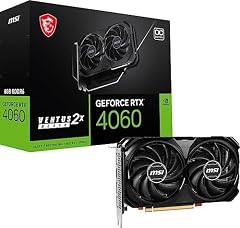
msi Gaming GeForce RTX 4060 8GB GDRR6 Extreme Clock
- Chip
- NVIDIA
- GPU
- GeForce RTX 4060
- Memory
- 8 GB
$699.00 (as of 10/20/2026 11:06 PDT - Details)
An MSI variant of the RTX 4060 with a higher boost clock of 2505 MHz and TORX Fan 4.0 cooling. It shares the same Ada Lovelace core as the ASUS Dual EVO, making it a direct alternative.
Pros
- Higher factory boost clock than many RTX 4060 models
- DLSS 3 support
- AV1 encode
Cons
- Same 128-bit memory interface as other RTX 4060s
- Not stated by the seller: power connector or dimensions
Good fit if
- Users who prefer MSI's cooling solution
- 1080p gamers who want a slightly higher clock out of the box
Skip if
- You can get a Blackwell-based card for a similar price
- You need more VRAM or a wider bus
Verdict: A competent Ada Lovelace card with a modest speed bump over baseline RTX 4060 specs.
3 Best Ampere all-rounder

MSI Gaming GeForce RTX 3060 Ti LHR 8GB GDRR6 Boost Clock
- Chip
- NVIDIA
- GPU
- GeForce RTX 3060 Ti
- Memory
- 8 GB
$695.00 (as of 10/20/2026 06:06 PDT - Details)
The RTX 3060 Ti LHR features 4864 CUDA cores on a 256-bit bus with GDDR6 memory, offering more memory bandwidth than any 128-bit card in this list. It supports DLSS 2 and second-gen ray tracing cores.
Pros
- 256-bit memory interface (448 GB/sec bandwidth)
- 4864 CUDA cores, the second highest count in this pool
- DLSS 2 Super Resolution and Ray Reconstruction
Cons
- Older Ampere architecture, no DLSS 3 or 5
- LHR (Lite Hash Rate) label may affect secondary market value
Good fit if
- 1440p gamers who prefer bandwidth over architecture generation
- Users pairing with older PCIe 3.0 or 4.0 systems
Skip if
- You want the latest AI upscaling features (DLSS 3 or 5)
- You need AV1 encoding (not supported on Ampere)
Verdict: A capable card for 1440p gaming if you don't need the newest DLSS technologies.
4 Best 256-bit GDDR6X pick

GIGABYTE GeForce RTX 3070 Ti Vision OC 8G Graphics Card
- Chip
- NVIDIA
- GPU
- GeForce RTX 3070 Ti
- Memory
- 8 GB
$765.00 (as of 10/20/2026 05:06 PDT - Details)
The RTX 3070 Ti Vision OC uses GDDR6X memory on a 256-bit bus, delivering higher memory bandwidth than GDDR6-based competitors. Its 6144 CUDA cores are among the most in this pool.
Pros
- GDDR6X memory, faster than GDDR6
- 6144 CUDA cores, the highest count of any pick
- 256-bit memory interface
Cons
- No DLSS 3 or 5 support (Ampere generation)
- Not stated by the seller: power consumption or size
Good fit if
- Gamers who want raw CUDA core count for compute tasks
- Users who prefer GDDR6X's bandwidth for high-resolution textures
Skip if
- DLSS multi-frame generation is important to you
- You need a card with AV1 encoding
Verdict: The highest CUDA core count in this list, but limited by its older Ampere architecture.
5 Compact Ampere option

EVGA 08G-P5-3751-KR GeForce RTX 3070 XC3 Black Gaming
- Chip
- NVIDIA
- GPU
- GeForce RTX 3070
- Memory
- 8 GB
$585.00 (as of 10/20/2026 05:05 PDT - Details)
The EVGA RTX 3070 XC3 Black Gaming uses a smaller 2.2-slot design with iCX3 cooling. It has 5888 CUDA cores, a 256-bit bus, and GDDR6 memory, making it a space-efficient Ampere card.
Pros
- Compact form factor suitable for smaller cases
- 5888 CUDA cores with 256-bit memory bus
- EVGA iCX3 cooling with ARGB LED
Cons
- GDDR6, not GDDR6X (unlike the 3070 Ti)
- No DLSS 3 or AV1 encoding
Good fit if
- SFF (small form factor) builders
- Users who want an EVGA card with good cooling
Skip if
- You need more memory bandwidth for 4K textures
- You want a current-generation architecture
Verdict: A space-conscious pick that still delivers strong 1440p performance.
6 Best Pascal holdover

EVGA GeForce GTX 1080 SC2 Gaming
- Chip
- NVIDIA
- GPU
- GeForce GTX 1080
- Memory
- 8 GB
$379.00 (as of 10/20/2026 05:05 PDT - Details)
The GTX 1080 SC2 Gaming remains popular for budget builds. It has 2560 CUDA cores on a 256-bit bus with GDDR5X memory. It lacks ray tracing and DLSS, but its driver support is mature.
Pros
- 256-bit memory interface with GDDR5X
- EVGA iCX cooling with nine thermal sensors
- Widely compatible with older DirectX 12 titles
Cons
- No ray tracing or Tensor Cores
- No DLSS support of any kind
Good fit if
- Budget 1080p gamers who play older or less demanding titles
- Users who want a reliable card without software upscaling dependencies
Skip if
- You want to play modern ray-traced games
- DLSS is a necessity for your performance targets
Verdict: A functional legacy card for very tight budgets, but missing modern features.
7 Alternative GTX 1080

ASUS GeForce GTX 1080 8GB ROG Strix Graphics Card
- Chip
- NVIDIA
- GPU
- GeForce GTX 1080
- Memory
- 8 GB
$479.00 (as of 10/20/2026 16:06 PDT - Details)
The ASUS ROG Strix GTX 1080 A8G Gaming offers the same Pascal specs as the EVGA card but with ASUS's Strix cooling solution. It is a direct alternative for those who prefer ASUS's build.
Pros
- 256-bit memory bus with GDDR5X
- ROG Strix cooling design
- Reliable for 1080p gaming in older titles
Cons
- No ray tracing or DLSS
- No AV1 encoding support
Good fit if
- Users who prefer ASUS ROG build quality
- Budget builds for esports titles
Skip if
- You need any form of AI upscaling
- You plan to play modern AAA games at high settings
Verdict: A comparable option to the EVGA GTX 1080 with different cooling and aesthetics.
8 Lowest entry barrier

msi Gaming GeForce RTX 3050 8GB GDRR6 Boost Clock
- Chip
- NVIDIA
- GPU
- GeForce RTX 3050
- Memory
- 8 GB
$442.26 (as of 10/20/2026 06:06 PDT - Details)
The RTX 3050 8GB is the most affordable pick in this list. It has 2560 CUDA cores, Ampere architecture, and supports DLSS 2. It is suited for entry-level 1080p gaming.
Pros
- Lowest-priced card in this guide's pool
- DLSS 2 Super Resolution support
- Second-gen ray tracing cores
Cons
- 128-bit memory interface limits bandwidth
- Lower CUDA core count than other Ampere cards in this list
Good fit if
- First-time builders with a very limited budget
- 1080p gaming at low to medium settings
Skip if
- You want to play AAA games at high settings
- You need DLSS 3 or higher
Verdict: An entry-level card with ray tracing support and DLSS 2.
9 Best AMD pick

Sapphire Radeon RX9060XT Pulse Gaming 8GB GDDR6 2xHDMI DP
- Chip
- AMD
- GPU
- Radeon RX 9060 XT
- Memory
- 8 GB
$711.88 (as of 10/20/2026 06:07 PDT - Details)
The Sapphire Radeon RX9060XT Pulse Gaming 8GB is the only AMD card in this pool. Its RDNA-based architecture and two HDMI ports distinguish it from the all-NVIDIA competition. Specifications beyond the listed GPU and VRAM are not stated by the seller.
Pros
- Includes two HDMI ports for multi-monitor setups
- Only AMD option in this 8GB list
- RDNA architecture as listed in pool
Cons
- Most specifications not stated by the seller
- No DLSS equivalent confirmed in specs
Good fit if
- Users who prefer AMD GPUs or need dual HDMI
- Builds where AMD ecosystem is desired
Skip if
- You rely heavily on NVIDIA's DLSS or NVENC
- Detailed specs are important for your purchase decision
Verdict: The sole AMD representative; its limited stated specs make direct comparison difficult.
10 Budget alternative (reseller)

Graphics Card Fit for RTX 4060 8G 4060TI 16G 3050 8GB GDDR6 N12058-001
- Chip
- NVIDIA
- GPU
- RTX 4060
- Memory
- 8 GB
$1,025.46 (as of 10/20/2026 05:07 PDT - Details)
This listing is a reseller configuration described as fit for RTX 4060 and other 8GB cards. Its generic branding and lack of stated core architecture make it a risky pick, included only for completeness.
Pros
- Listed compatibility with multiple 8GB GPU models
- May fit niche upgrade scenarios
- Lowest possible cost among generic entries
Cons
- Generic, unbranded product with no stated chip or memory specs
- No stated CUDA core count, architecture, or supported technologies
Good fit if
- Users who need a placeholder or replacement card for specific OEM systems
- Only if budget is extremely constrained and specs are unimportant
Skip if
- You want a known GPU with published specifications
- You need support for DLSS, ray tracing, or AV1 encoding
Verdict: Not recommended for standard gaming or creation builds due to lack of verified specs.
Comparison table
| # | Graphics card | Chip | GPU | Memory |
|---|---|---|---|---|
| 1 | ASUS Dual GeForce RTX 5060 Ti 8GB GDDR7 OC Edition Gaming Graphics Card | NVIDIA | GeForce RTX 5060 Ti | 8 GB |
| 2 | msi Gaming GeForce RTX 4060 8GB GDRR6 Extreme Clock | NVIDIA | GeForce RTX 4060 | 8 GB |
| 3 | MSI Gaming GeForce RTX 3060 Ti LHR 8GB GDRR6 Boost Clock | NVIDIA | GeForce RTX 3060 Ti | 8 GB |
| 4 | GIGABYTE GeForce RTX 3070 Ti Vision OC 8G Graphics Card | NVIDIA | GeForce RTX 3070 Ti | 8 GB |
| 5 | EVGA 08G-P5-3751-KR GeForce RTX 3070 XC3 Black Gaming | NVIDIA | GeForce RTX 3070 | 8 GB |
| 6 | EVGA GeForce GTX 1080 SC2 Gaming | NVIDIA | GeForce GTX 1080 | 8 GB |
| 7 | ASUS GeForce GTX 1080 8GB ROG Strix Graphics Card | NVIDIA | GeForce GTX 1080 | 8 GB |
| 8 | msi Gaming GeForce RTX 3050 8GB GDRR6 Boost Clock | NVIDIA | GeForce RTX 3050 | 8 GB |
| 9 | Sapphire Radeon RX9060XT Pulse Gaming 8GB GDDR6 2xHDMI DP | AMD | Radeon RX 9060 XT | 8 GB |
| 10 | Graphics Card Fit for RTX 4060 8G 4060TI 16G 3050 8GB GDDR6 N12058-001 | NVIDIA | RTX 4060 | 8 GB |
How this list was made
We selected 13 graphics cards with exactly 8GB of dedicated video memory from the catalogue. The pool originally included 13 unique listings after folding near-duplicates. Each pick was evaluated on GPU architecture generation, memory type (GDDR6, GDDR6X, GDDR7), ray tracing core generation, Tensor Core generation, and supported technologies such as DLSS version and AV1 encoding. Prices shown are live and read from the store listing at the time of publication. No units were tested or benchmarked by us.
Choosing the right one
Identify your target resolution and games
8GB of VRAM is well-suited to 1080p and entry-level 1440p gaming. For modern titles like Cyberpunk 2077 or Alan Wake 2 at high settings, a card with Blackwell or Ada Lovelace architecture and DLSS support will offer a better experience than older Pascal or Turing cards. If you play competitive esports titles (Valorant, Counter-Strike 2), even an RTX 3050 or GTX 1080 can deliver high framerates at lower settings.
Consider the GPU architecture generation
The 8GB pool spans five generations: Pascal (GTX 1080), Turing (RTX 2080 Super), Ampere (RTX 3060 Ti, 3070, 3070 Ti, 3050), Ada Lovelace (RTX 4060), and Blackwell (RTX 5060, 5060 Ti). Newer architectures bring better ray tracing cores, Tensor Cores, and upscaling technologies. Blackwell cards support DLSS 5 with Dynamic Multi Frame Generation and 3D-Guided Neural Rendering, which can significantly improve performance in supported games. Ada Lovelace cards offer DLSS 3 Frame Generation.
Memory bandwidth and bus width matter
Many 8GB cards use a 128-bit memory interface (RTX 4060, 5060, 5060 Ti, 3050), which limits theoretical bandwidth. The RTX 3060 Ti, 3070, 3070 Ti, and 2080 Super use a 256-bit bus, offering twice the memory bandwidth for texture-heavy workloads. The GTX 1080 also uses a 256-bit bus with GDDR5X. If you play games with large texture packs at 1440p, the wider bus may provide smoother performance regardless of architecture.
Check for DLSS version and AI features
DLSS 5 is exclusive to RTX 50-series Blackwell GPUs (RTX 5060 and 5060 Ti in this list). DLSS 3 is available on RTX 40-series Ada Lovelace cards (RTX 4060). DLSS 2 is supported on RTX 30-series Ampere (3060 Ti, 3070, 3070 Ti, 3050) and RTX 20-series Turing (2080 Super). The GTX 1080 does not support any form of DLSS. If AI upscaling is important, choose a card from the Blackwell or Ada Lovelace generations.
Factor in encoding and media features
AV1 encoding is supported on RTX 4060, 5060, and 5060 Ti cards via the eighth- or ninth-generation NVENC encoder. This is beneficial for streamers and video editors who want higher quality at lower bitrates. Older Ampere and Turing cards use H.264 and H.265 encoding. The GTX 1080 also lacks AV1 decode, which may affect video playback in modern browsers.
Physical size and power requirements
Graphics card dimensions and power connector types vary by model and are often not stated by the seller in catalogue listings. For compact cases, look for cards labeled with a small form factor design, such as the EVGA RTX 3070 XC3 Black. Always check your case's clearance and your power supply's available PCIe connectors before purchasing. The pool entries do not include physical dimensions or TDP.
Questions
Is 8GB of VRAM enough for gaming in 2026?
For 1080p gaming and esports titles, 8GB remains sufficient for most games at medium to high settings. At 1440p, some modern AAA games may exceed 8GB at ultra textures or with ray tracing enabled. If you play at 4K or use heavy texture mods, consider a 12GB or 16GB card instead.
Which 8GB graphics card supports DLSS 5?
The ASUS Dual GeForce RTX 5060 Ti 8GB and the ASUS Dual GeForce RTX 5060 8GB both support DLSS 5 with Dynamic Multi Frame Generation and 3D-Guided Neural Rendering. These are the only cards in this guide with fifth-generation Tensor Cores.
Are older 8GB cards like the GTX 1080 still usable?
Yes, the GTX 1080 can handle many older DirectX 12 and Vulkan games at 1080p, especially esports titles. It does not support ray tracing, DLSS, or AV1 encoding. Driver support remains available, but performance in modern AAA games will be limited compared to newer architectures.
Should I choose a card with a 256-bit bus or 128-bit bus for 8GB?
A 256-bit bus offers higher memory bandwidth, which can help with high-resolution textures and higher frame rates at 1440p. Cards like the RTX 3060 Ti, RTX 3070, RTX 3070 Ti, and RTX 2080 Super have 256-bit buses. The RTX 4060, 5060, and 5060 Ti use a 128-bit bus, which is still fine for 1080p but may bottleneck at higher settings.
Does this guide include any AMD 8GB cards?
Yes, the Sapphire Radeon RX9060XT Pulse Gaming 8GB is the only AMD option. Most of its specifications are not stated by the seller, making direct comparison with NVIDIA picks difficult. If you prefer AMD, you may want to look at cards with full spec details elsewhere.
Can I use an 8GB graphics card for video editing or 3D rendering?
8GB is adequate for 1080p video editing in software like Adobe Premiere Pro or DaVinci Resolve, especially with AV1 encoding on Ada Lovelace or Blackwell cards. For 4K timelines or heavy 3D rendering workloads, 12GB or more is recommended.
What changed
- : First published.